

Licorice root sticks are more than a candy flavor. People have chewed them as a folk remedy for a very long time, including for mouth irritation and ulcers.
This post is a licorice deep dive, and it connects to the broader collection of what people try in my companion guide: natural remedies for canker sores from around the world.
Important (Medical disclaimer)
This is educational and experience-based. Talk to a clinician if you have concerns, frequent ulcers, or medical conditions that change what is safe for you.
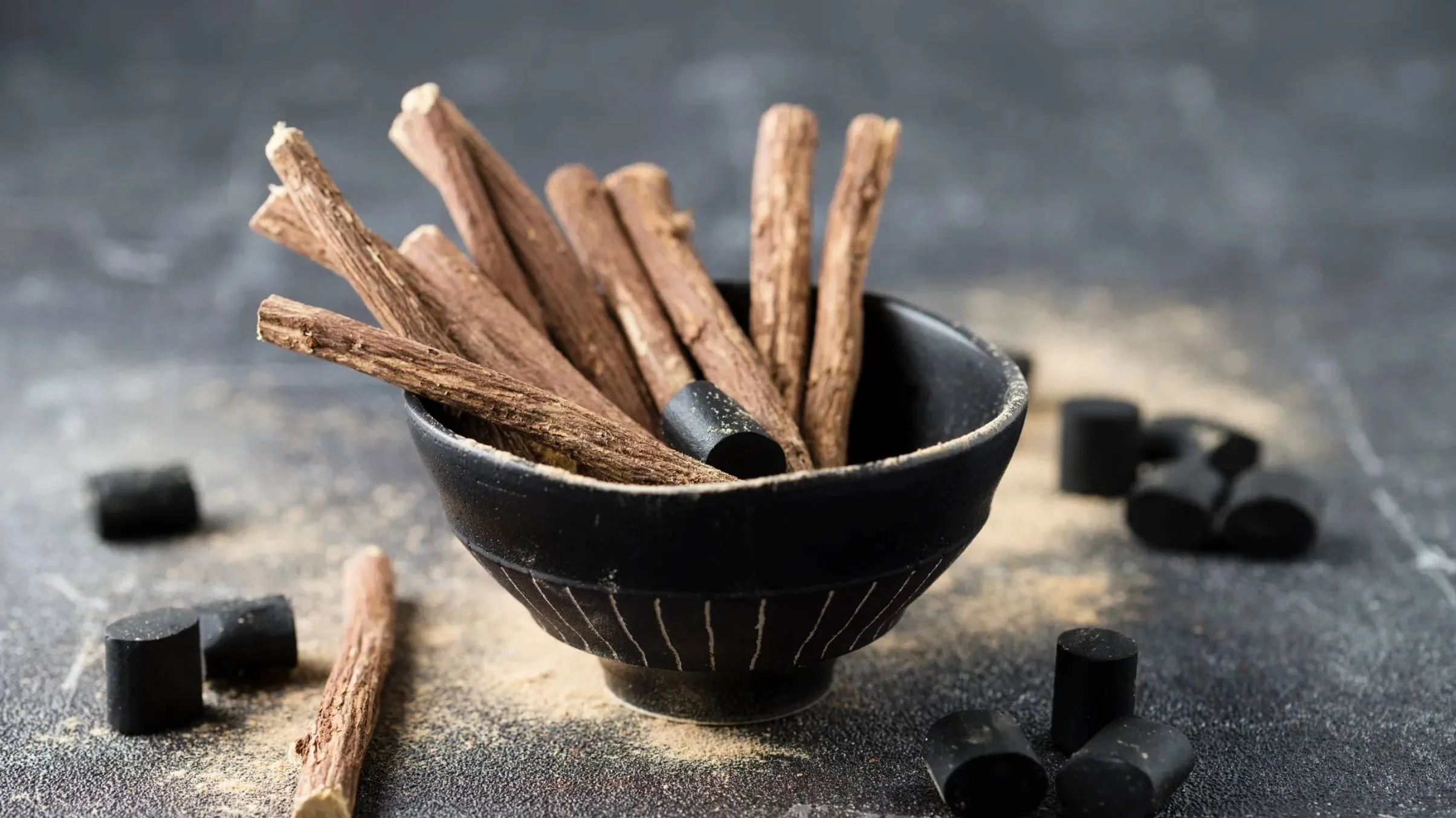
Dried licorice root, commonly used in traditional herbal medicine.
What licorice actually is
Licorice is the root of Glycyrrhiza glabra, a plant native to parts of Europe and Asia. The name “glycyrrhiza” roughly translates to “sweet root,” and yes, it is sweet.
Licorice has a long track record in traditional medicine across multiple cultures. People have used it for a wide range of reasons, including soothing irritated tissue.
If you have ever assumed “licorice” means candy, you are not alone. The plant came first. The candy flavor came later.
And historically, licorice was not treated like a novelty. Ancient healers in China, Egypt, India, and Greece used it in different forms. Roman-era writers even mention licorice for mouth ulcers, which is a nice reminder that people have been annoyed by mouth sores for a very long time.
Licorice’s popularity carried into the ages. Stories range from soldiers chewing it on long marches, to monks growing it in herb gardens, to modern people using it as a “keep my mouth busy” habit replacement.
Why licorice might help with canker sores (the science)
Modern research focuses on compounds in licorice such as glycyrrhizin and various flavonoids, and how they may contribute anti-inflammatory and protective effects in irritated tissues.
If you want a research-heavy overview (with citations and trial summaries), a useful starting point is this review focused on recurrent aphthous stomatitis (canker sores):
In plain English: licorice is studied as a “multi-tool” herb. It is discussed in the context of reducing inflammation, supporting healing, and possibly changing the local environment around an ulcer in a way that makes it less miserable.
What’s actually happening at the chemical level
When people say “licorice helps canker sores,” they are really talking about a small group of active compounds inside the root, not the plant as a whole, and definitely not the candy.
The two most important players are:
1. Glycyrrhizin (and glycyrrhetinic acid)
Glycyrrhizin is the compound that gives licorice its sweetness (roughly 30 to 50 times sweeter than sugar). In the body, and potentially locally in the mouth, it can break down into glycyrrhetinic acid, which is where many of the anti-inflammatory effects are discussed.
At a chemical and cellular level, this family of compounds is associated with effects like:
- Downshifting inflammatory signaling, including pathways involved in prostaglandin-related inflammation
- Reducing local inflammatory “noise” in damaged mucosal tissue
- Slowing breakdown around the ulcer margins, which may help the sore feel less raw
In plain English: it does not numb the sore like lidocaine, but it can turn the volume down on the inflammation that keeps the sore irritated.
That is why people often report:
- Less burning
- Less redness
- Less “raw” feeling after contact
2. Licorice flavonoids (the unsung helpers)
Licorice root also contains flavonoids (plant polyphenols), including compounds like liquiritigenin and isoliquiritigenin.
These are discussed for a few subtle but useful effects:
- Antioxidant activity: may reduce oxidative stress in damaged tissue
- Mild antimicrobial activity: may discourage secondary irritation around an open sore
- Support for epithelial repair: may help the surface barrier rebuild
Canker sores are not infections, but once the surface is broken, everything in your mouth can become an irritant. This is the “calm the neighborhood” part of the story.
Why topical contact matters so much
One key insight from the studies is how licorice is used. Topical products (patches, gels, pastes) tend to work better than swallowing something because:
- The compounds stay concentrated at the sore
- They can form a temporary protective layer
- They reduce mechanical irritation from teeth, tongue, and food
That is why the research tends to favor bioadhesive licorice patches over tea or candy. It is chemistry plus physics working together.
A quick note on “DGL” and hormone-adjacent effects
If you see deglycyrrhizinated licorice (DGL), that is licorice with most glycyrrhizin removed. It may keep many helpful flavonoids, and it is often discussed as a safer option for frequent use, but you may lose some of the glycyrrhizin-linked effects.
Glycyrrhetinic acid is also interesting because it interacts with enzymes related to cortisol metabolism. This helps explain why licorice can reduce inflammation, and why overuse can affect blood pressure and electrolytes. I cover that risk more directly in the safety section below.
What the clinical studies suggest (in plain English)
The most practical takeaway is this: topical licorice preparations (things you place on the sore, not just candy) have been studied and, in several trials, were associated with less pain, smaller ulcers, and/or faster healing compared to placebo.
Two examples you can read directly:
- A study on licorice-containing bioadhesive patches for recurrent aphthous ulcers: PubMed: 18853400
- A randomized trial of an intraoral adhesive patch containing licorice extract: PubMed: 18348383
That does not mean licorice “cures” canker sores. It means it may help with the exact things people care about day-to-day: pain, friction, and time-to-normal.
How people use licorice for mouth sores
If you search “licorice for canker sores,” you will see a lot of approaches. The ones that show up most often fall into a few buckets:
- Topical patches / mucoadhesive products: These try to keep the active ingredients in contact with the sore longer (and sometimes help as a physical barrier too).
- Mouth rinse / gargle approaches: Using a licorice-containing rinse to bathe irritated tissue.
- Tea: More of a soothing routine than a targeted “treatment,” but many people like it as a gentle option.
- Chew sticks: Some people chew dried licorice root sticks. If you do this, be mindful that it is not the same thing as a studied patch or standardized extract dose.
If you want a simple, practical way to think about it, here are three common “how” options:
- Chew licorice root sticks: If you try this, go slow and gentle. The goal is not to grind your teeth down, it is to keep your mouth busy and see if it feels soothing around an irritated spot.
- Try a patch-style product: This is closer to what has actually been studied, because it keeps contact with the ulcer. If your sores are in places where a patch can stick, this is often the most “targeted” approach.
- Make licorice tea: Some people brew licorice root tea and use it as a mild rinse (swish, then swallow). It is not as direct as a patch, but it is a low-drama option when everything else burns.
After trying any of these, listen to your body. If a licorice product irritates your mouth (uncommon, but possible), stop.
If you try licorice, think in terms of comfort and support, not magic. The best case is usually “it makes the sore less miserable while it heals.”
Moderation matters (a safety note)
Licorice is one of those herbs that is “natural” and still very capable of causing problems if you overdo it. Large amounts of glycyrrhizin-containing licorice can contribute to issues like high blood pressure and low potassium in susceptible people.
If you are pregnant, have hypertension, kidney disease, heart disease, or take medications that interact with blood pressure or potassium, it is worth being extra cautious and asking a clinician before making licorice a daily habit.
Keep up your oral hygiene
Think of licorice as a complement to normal oral care, not a replacement. A sore that is constantly irritated by rough brushing, alcohol-based mouthwash, or sharp foods is going to stay angry. Gentle hygiene and a bit of patience still do most of the work here.
Conclusion
Licorice is a great example of an old-school remedy that modern research has at least partially explored. If you are the kind of person who likes gentle, non-burning options, it is one of the more interesting natural tools in the canker sore world.
If you want the broader context of what people try globally (licorice included), you can go back to: natural remedies for canker sores from around the world.